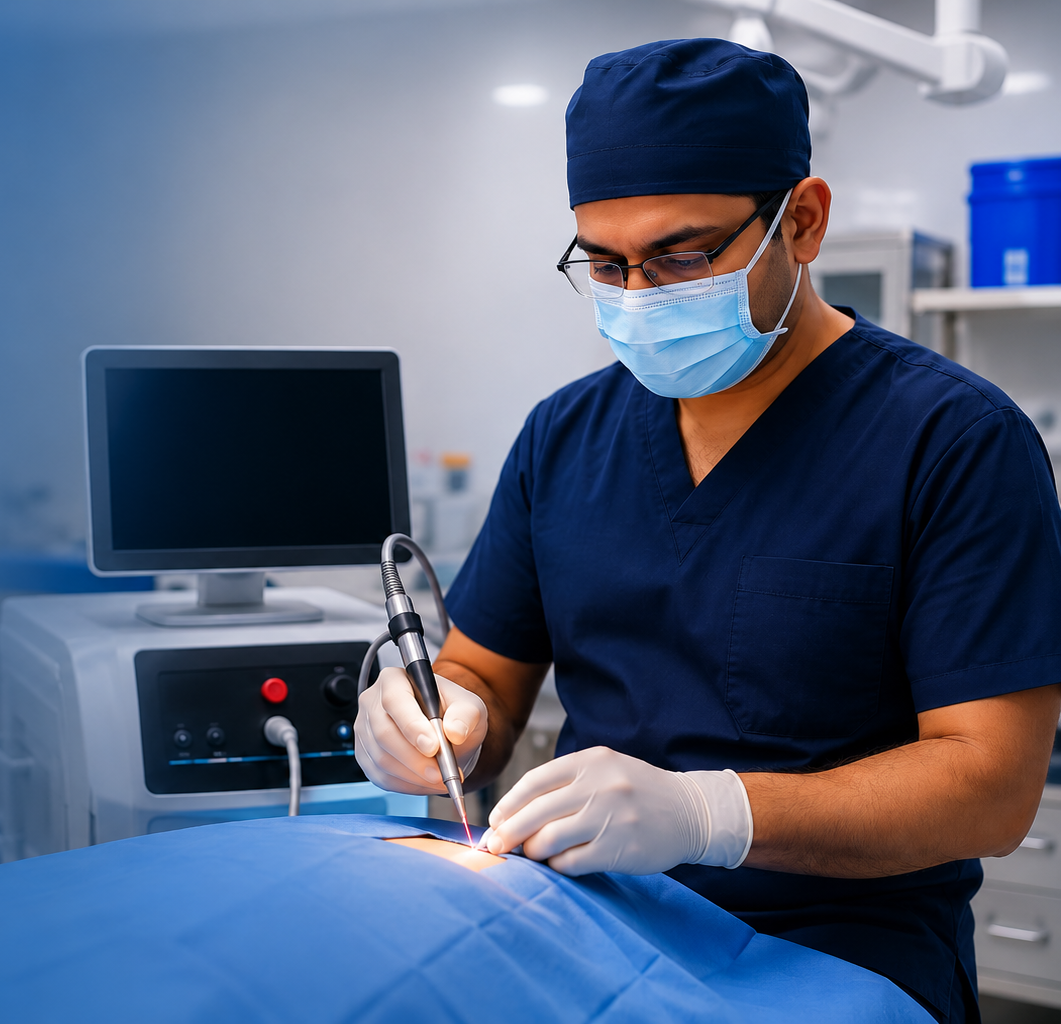
Experience advanced and minimally invasive Laser Fissure Treatment in Hyderabad under the expert care of Dr. Pallam Praveen. Our modern laser technology is designed to provide less pain, minimal bleeding, quicker healing, and faster recovery for patients suffering from anal fissures.
Book Appointment
An anal fissure is a small tear in the lining of the anal canal that can cause severe pain, burning sensation, and bleeding during bowel movements. While medications and dietary changes may help in early stages, chronic fissures often require advanced treatment. Laser fissure treatment is one of the latest and most effective minimally invasive procedures available today. Compared to conventional surgery, laser treatment causes less tissue damage, reduced postoperative pain, minimal bleeding, and quicker recovery, making it an ideal option for many patients. At Dr. Pallam Praveen's center, every patient receives a comprehensive evaluation and a personalized treatment plan aimed at achieving long-term relief and improved quality of life.
Anal fissures often cause significant discomfort during and after bowel movements. Recognizing the symptoms early can help prevent complications and allow timely treatment.
Sharp or burning pain while passing stools is one of the most common symptoms of an anal fissure.
Bright red blood may appear on toilet paper or in the stool due to the small tear in the anal lining.
Many patients experience a burning or stinging sensation that may continue for several hours after bowel movements.
A small tear or cut near the anal opening may sometimes be visible during examination.
Persistent itching and irritation around the anal area may occur due to inflammation.
Spasm of the anal sphincter muscles can increase pain and delay healing of the fissure.
Several factors can lead to the development of an anal fissure. Identifying and treating these causes can help prevent recurrence.
Passing hard stools puts excessive pressure on the anal canal, leading to tears.
Repeated straining increases the risk of developing fissures and delays healing.
Frequent bowel movements may irritate and damage the delicate anal lining.
Insufficient dietary fiber often causes hard stools and constipation, increasing fissure risk.
Some women may develop anal fissures due to pressure and trauma during delivery.
Certain gastrointestinal diseases can contribute to recurrent anal fissures.
Laser technology has transformed fissure treatment by offering a minimally invasive alternative to conventional surgery with improved patient comfort and quicker recovery.
Laser treatment causes less tissue trauma, reducing postoperative discomfort.
Laser energy seals blood vessels during treatment, resulting in minimal bleeding.
Many patients can return to normal daily activities much sooner than with traditional surgery.
The minimally invasive approach helps reduce tissue damage and supports smoother healing.
Most laser procedures are completed efficiently, allowing for day-care treatment in suitable cases.
Laser technology precisely targets affected tissue while preserving surrounding healthy structures.
Patients trust Dr. Pallam Praveen for evidence-based treatment, advanced laser technology, and compassionate care focused on long-term relief and patient satisfaction.
Comprehensive diagnosis and personalized treatment plans based on each patient's condition.
Modern minimally invasive procedures designed for safer and more comfortable treatment.
Every patient receives an individualized treatment strategy and detailed follow-up guidance.
Treatment protocols focus on helping patients return to their routine with minimal downtime.
Clear communication, confidential consultations, and compassionate support throughout treatment.
Regular reviews and lifestyle advice help promote healing and reduce recurrence risk.
Not every anal fissure requires surgery. However, patients with chronic symptoms or those who do not respond to medications and lifestyle modifications may benefit from advanced laser treatment. Early intervention can help prevent prolonged pain and complications.
Patients experiencing fissures for more than 6-8 weeks despite medical treatment may require laser surgery.
Persistent pain during or after bowel movements that affects daily life should be evaluated by a specialist.
Repeated bleeding while passing stools may indicate an untreated chronic fissure requiring advanced care.
If dietary changes, medications, and ointments fail to provide relief, laser treatment may be recommended.
Persistent sphincter muscle spasm can delay healing and may require surgical management.
Patients seeking minimally invasive treatment with less pain and quicker return to work often choose laser surgery.
Recovery following laser fissure treatment is generally faster than conventional surgery. Most patients experience reduced discomfort and can gradually resume normal activities as advised by their doctor.
Consume fruits, vegetables, and whole grains to maintain soft stools and promote healing.
Adequate hydration helps prevent constipation and reduces strain during bowel movements.
Follow your doctor's instructions regarding medications and post-operative care.
Keeping the anal area clean and dry supports healing and minimizes irritation.
Avoid lifting heavy weights and excessive straining until recovery is complete.
Regular follow-up appointments help monitor healing and ensure the best long-term outcomes.
If you are suffering from severe pain, bleeding, or chronic anal fissure symptoms, don't delay treatment. Consult Dr. Pallam Praveen for advanced laser fissure treatment designed for less pain, faster recovery, and long-term relief.
Book AppointmentAn anal fissure is a small tear in the lining of the anal canal that causes pain and bleeding during bowel movements.
Laser treatment is minimally invasive and generally causes less pain compared to conventional surgery.
The procedure usually takes around 20 to 30 minutes depending on the patient's condition.
Many patients are discharged on the same day after evaluation by the treating doctor.
Recovery varies, but many patients return to routine activities within a short period while following medical advice.
When performed by an experienced specialist, laser fissure surgery is considered a safe and effective treatment option.
Acute fissures may heal with medicines and lifestyle changes, while chronic fissures may require surgical treatment.
A high-fiber diet along with adequate water intake is generally recommended to support healing.
Maintaining healthy bowel habits and preventing constipation can reduce the risk of recurrence.
Seek medical evaluation if pain, bleeding, or symptoms persist despite home treatment.